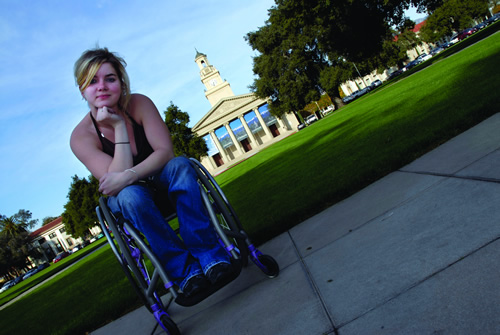
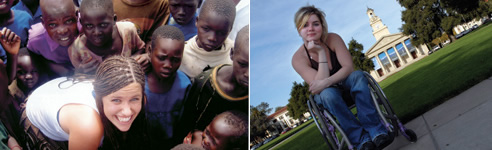
Sernaker had seen television images of emaciated African children well before entering high school.
“I saw all those kids starving and covered with flies and it was just horrific,” she recalled. “But it also was overwhelming... I didn’t feel like I could make a difference.”
But as a high school senior, Sernaker saw a doc- umentary, “Invisible Children,” about the plight of Northern Ugandan children that gave her both hope and a driving desire to help.
“It left me feeling troubled,” she said of the doc- umentary, which led to the creation of a nonprofit outreach organization of the same name. “But it also left me feeling hopeful.”
“The documentary shows kids like me who have actually helped, really made a difference,” she said. “I left that screening knowing that I had to be part of the story.”
Sernaker soon arranged a screening of “Invisible Children” at her San Diego high school.
Some 1,000 teens who attended heard about the estimated 30,000 Ugandan youngsters reportedly abducted and forced to fight as child soldiers in a rebel army. The children live in near-constant fear of the Lord’s Resistance Army (LRA) and work every night to find safe places to sleep, according to the documentary.
Sernaker established an Invisible Children club at her high school and helped generate $25,000 in her senior year to support the organization’s efforts to help the children of Northern Uganda.
When Sernaker came to the University of Redlands last year, she says she knew she was at a place likely to be receptive to the cause of Invisible Children.
“I recognized right away that there was a sense of community here. Not just a sense of the campus community, but of the city and the state, the nation and even the world,” she said. “It’s like the school has this heartbeat that is in sync with greater issues and greater needs.”
Still, at the start of her freshman year, Sernaker was uncertain about whether to continue her work.
“It’s a very heavy, intense thing to bring with you,” she said. “But I realized this was a great place to take the message. I had to share it.”
Sernaker then organized a screening of the documentary. She got her message out primarily through campus clubs and other organizations. One-fifth of students and some university leaders attended the screening.
A Redlands chapter of Invisible Children was soon formed.
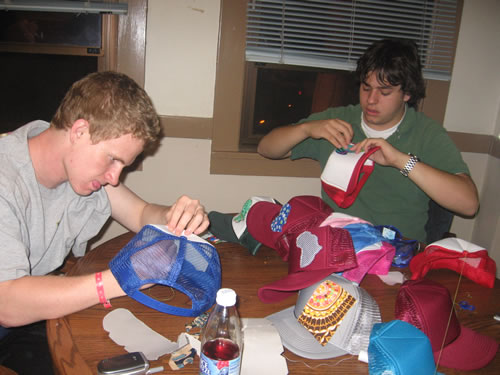
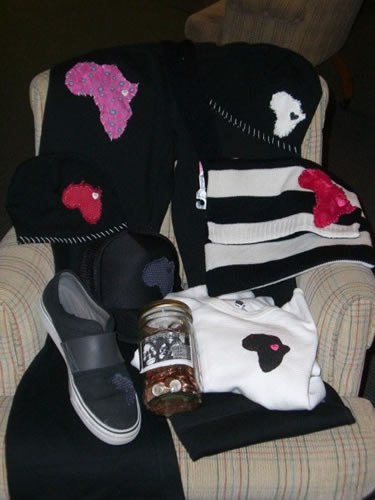
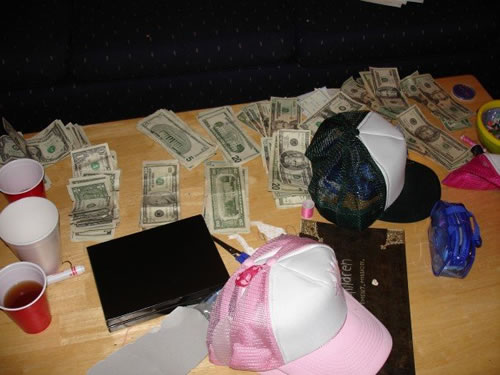
Campus clubs committed to a variety of fundraisers such as casino nights, a talent show, sewing nights and craft sales. A variety of groups, including academic clubs and Greek organizations, helped raise about $10,000. And fundraising efforts continue.
“Half the story is the students at the U of R,” said Sernaker.
“I’ve learned not to try to predict who will give and who won’t,” she said. “It might be the football player I barely know in class, or it might be that girl down the hall. Sometimes, people I don’t even know come up and give me checks.”
Sernaker said she’s been surprised by how easy it has been to get people to take up the Invisible Children’s cause.
“I think everyone wants to help, but they don’t know how,” she said. “My generation has heard a lot about poverty and terror—total devastation. We know it’s out there and we do care. But without a blueprint to help, we are like anyone else. We feel powerless.”
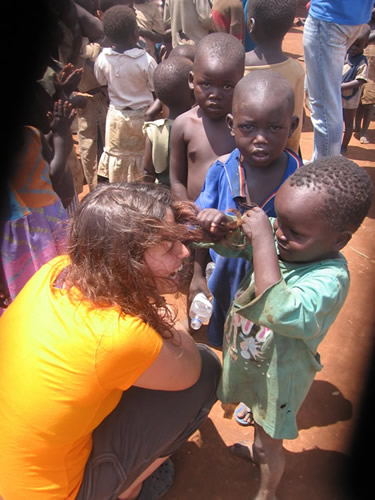
Last summer, Sernaker traveled to Uganda to work for Invisible Children’s education programs. She was heartened to see how much the group has accomplished, but humbled by the amount of work that remains.
“Being there helped me see that education really is the biggest weapon—the best way for me to make a difference,” she said. “Now I know that the money we are raising here is no small thing. What we are doing really matters.”
Sernaker has been hired to write manuals for Invisible Children, and has spoken to a variety of groups about what life is like for children in Uganda.
“I’ve had all these opportunities to be an ambassador for such important work,” she said. “And sometimes it kind of bums me out that I’m the one doing it—that there isn’t someone more qualified out there who’s willing to take this up.”
“But this feels right to me. It feels like what I’m supposed to be doing, so I’m happy to do it,” she said. “It’s an honor.”