




 Aug. 29, 2005 | Hurricane Katrina slams into the Gulf Coast—one of the most devastating
natural disasters in recent U.S. history. More than 1,800 people lose their lives. Eighty percent
of New Orleans ends up submerged.
Aug. 29, 2005 | Hurricane Katrina slams into the Gulf Coast—one of the most devastating
natural disasters in recent U.S. history. More than 1,800 people lose their lives. Eighty percent
of New Orleans ends up submerged.
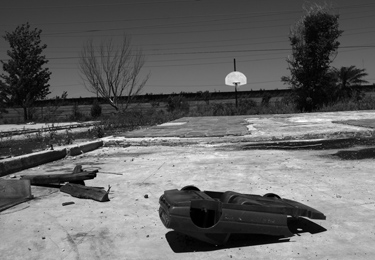
Almost two years later, Katrina’s massive impact is still felt. New Orleans’ French Quarter is restored, but other neighborhoods remain in shambles, vacant. Trash, cars and debris still line the streets.
The University of Redlands has borne witness to the storm’s wrath. Repeatedly.
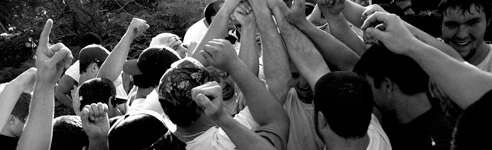
February-April 2007 | Redlands football players and coaches make a return to Katrina, using their strength not on the field but in stripped-down houses in St. Bernard Parish. A gathering of alumni and friends, brought together by this tragedy, bond and reunite in their efforts to help others. Students and staff again volunteer their spring break, working to rebuild homes and lives in the region.
 A helping hand:
 A Federal Emergency Management Agency trailer, used to house those displaced by the storm, sits on an abandoned street in St. Bernard Parish. Blocks away, members of the University of Redlands football team are working to rebuild a home. The team also worked in the region last spring.
“Our house is no longer just a building, on a street, in a town ravaged by a hurricane. It is a home, handed down through four generations, rebuilt by the loving hands of angels sent to us through you!”
From a note of thanks by the Gonzales and Minor family, read to the players as they were on the bus to head back home.
Teamwork: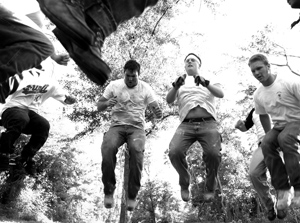
“Bonding usually occurs when it is an especially difficult task and every person is depending on the person next to him to achieve a certain goal,” said Gavril Gabriel ’09, a linebacker for the team.
“This is what we experienced in the humid, muggy and stinking surroundings in St. Bernard Parish.”
Still in their work boots, the football team leaps to practice in a state park in St. Bernard Parish after a full day laboring in hurricane-ravaged homes.
“Our team worked extremely hard while in New Orleans and it has paid off. It also helped bring our team closer together,” said Bryan Tsudama ’09. “We are unified, and that goes a long way.”
 Sustenance:
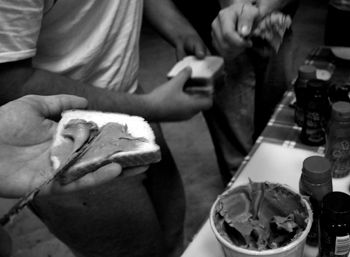
 The daily lunch menu: Peanut butter and jelly sandwiches. Dinner (and the occasional meal prepared by grateful residents) offers more variety.
The players are fed thanks to the Bon Appetit Management Company, which provides dining services at the university and donated all the food and supplies for the team’s trip.
On the grocery list: 50 loaves of bread; 40 gallons of milk; cases of apples, oranges, corn and green beans; 50 pounds of chicken breasts; 20 pounds of pork chops; 16 jars each of peanut butter and jelly.
The hungry team is also fed thanks to Athletic Director Jeff Martinez and his wife, Susan, the catering director for Bon Appetit at the university. They cook dinner for the group of about 60—preparing enough for 120 people.
Skills: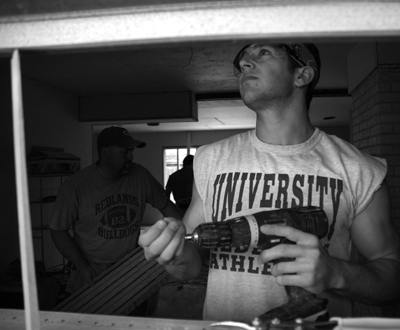
“They learned skills they didn’t know they had.”—Athletic Director Jeff Martinez.
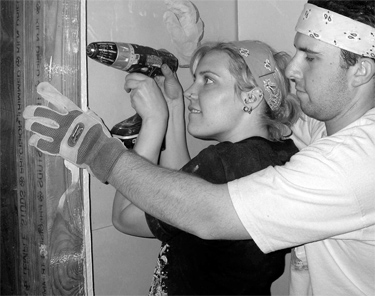
Wide receiver Ryan Easley ’08 prepares to drill at one of the nine homes and a Baptist church the team worked on during their recent trip. Last year, the team mucked out some 45 homes in 13 days, trudging through inches of mud filled with snakes, rodents and furniture to strip down and clear out the homes.
Compared to last year, their work is not as physically strenuous as it is mentally, according to Gabriel. Putting in floors, drywall, fiberglass and mudding requires more attention to detail.
“I really feel that this changed my life. It did last year on the first trip, with seeing how bad it was and ripping the houses down. And it did this year, with building them back up,” said Nicholas Schroeder ’09, a tight end.
 Strength:
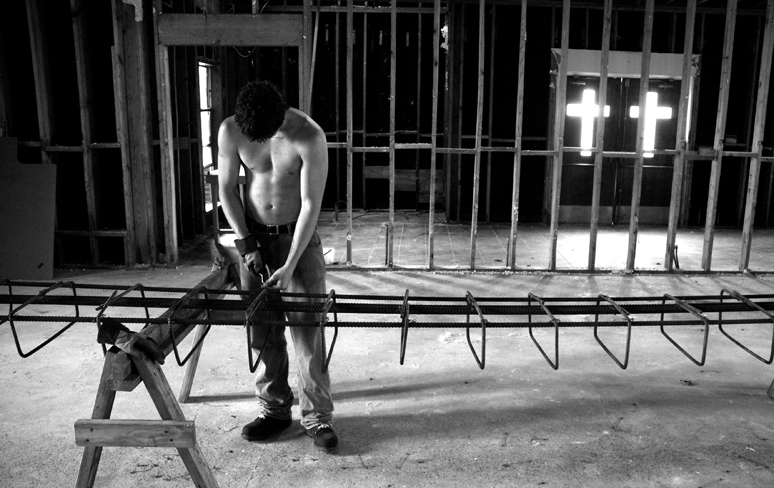
“I learned that if you have the ability to help and the opportunity arises to help someone, you are obliged to help.” —Gavril Gabriel ’09.
Nick Schroeder works in a Baptist church making pieces of heavy rebar. It is a repetitive job, one that is dirty and hot. And for those with strength. “It was by far the hardest work we had done so far,” said Matt Bean ’10, a linebacker.
 Laughter:
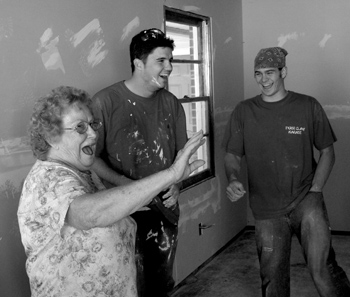
“I got a good laugh out of them boys,” says resident Lillie Lambert. “I think they’re wonderful. They’re something else. Work without stopping; big and strong.”
While cleaning up at the end of the day, Lambert, 84, entertains team members with stories—and warnings—about their upcoming visit to the French Quarter.
The team just finished putting up dry wall and insulation in her home, where she has lived since 1961. Earlier in the week, it had been only a frame.
“The main reason I made the return trip, and most of my teammates would agree, was because of the interaction we had with the residents of St. Bernard Parish,” said Gabriel.
 Tradition:
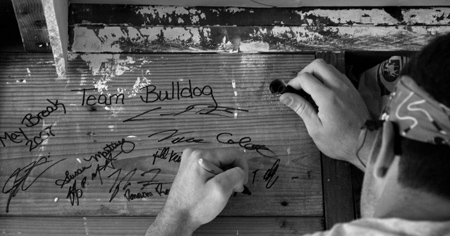
The team continues the tradition of writing their names before putting up dry wall.
*Student trips were made possible by the office of Community Service Learning and the generosity of the Will J. Reid Foundation, which subsidized a significant amount of travel costs.
 Returning:
 “It was a home again.”—Jeff Martinez
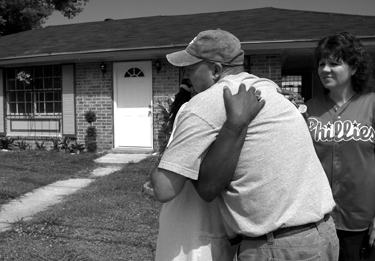
Jeff Martinez’s voice breaks when he begins to talk about Linda Jones (left) and her home, which Martinez and his wife, Susan, worked on during their trip with the university group that went during Spring Break.
When the couple left Jones’ home in Violet, La., in late February, it was dry walled, taped and mudded.
But during the Martinez’s visit in April, he sees the lights hanging from the ceiling—able to be turned on. Sees the appliances in place. It is awesome, he said. The Jones family was all but moved in, except for the bedroom furniture that still remained in Tennessee.
The family of five—Jones, her husband, her 84-year-old mother, a 31-year-old mentally disabled son and a 15-year-old son—would remain in their tiny FEMA trailer until it arrived.
 Not Forgotten:
 “One family cooked for us every night that we were there,” said Kathryn Wood, associate director of Community Service Learning.
“You really got a sense of appreciation from the residents there. They were glad to know that we cared and that we were there to help. They want to know they haven’t been forgotten.”
Wood, who accompanied a group of students on a week-long trip last year, said her spirits were lifted after her recent trip during which 30 students and advisors spent their Spring Break making stripped-out homes livable.
“There are still houses that have not been touched, but there are others that are occupied now,” she said. “The streetlights are back on, and more businesses are open. You can see a sense of life returning to the area, and that’s encouraging.”
 A need:
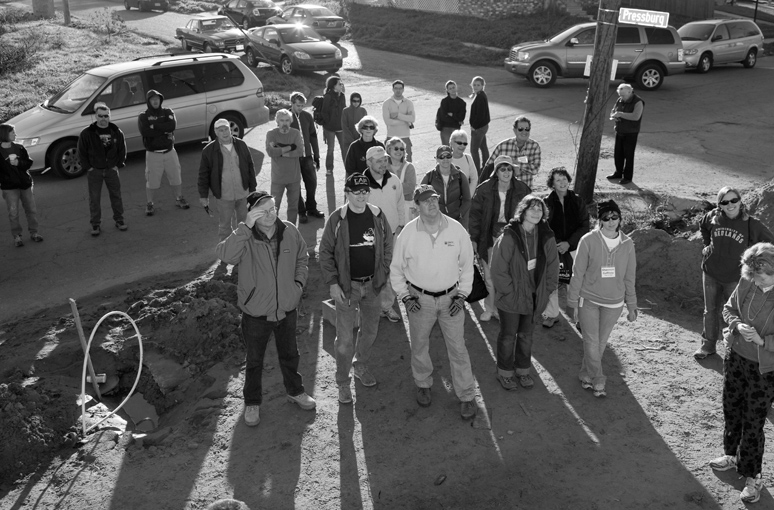
“Many, many of the alums that attended had not previously been engaged in events... so this opportunity certainly spoke to an unmet need for our alums.” —Julie Michaels, former Alumni Association president.
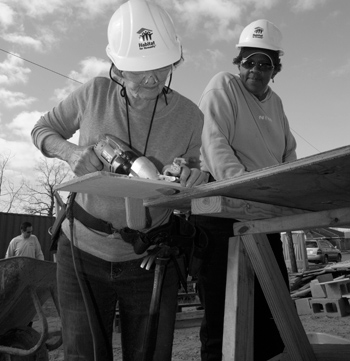
Ranging in age from 17-72, hailing from hometowns from Massachusetts to California, a group of about 50 university alumni, staff and friends work on several homes to near completion in the New Orleans area during their week-long trip in February.
 A sign:
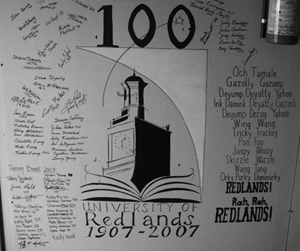
 The University of Redlands leaves a strong and spirited presence in Camp Hope, in Violet, La., where volunteers from the Spring Break and Alumni Association trips stayed.
Then-Alumni Association President Julie Michaels painted the university’s Centennial Logo during their trip in mid-February as part of a camp tradition in which visitors sign the logo of their school or organization.
Those on the Spring Break trip leave their mark on the camp, and on New Orleans, when they arrive a few weeks later, as does the football team during their visit
 Reunited:
 Two roommates are supposed to attend the Alumni Association trip to Louisiana to celebrate their 50th reunion. One becomes ill, but the other still makes the journey, coming from Washington State. A 1958 alumnus—a last minute sign-up—comes from Mississippi.
The two recognize one another from across the room after they arrive in Louisiana; they had been close college friends and hadn’t seen each other in 50 years.
There will be a chance for this group—and other alumni—to reunite next year. By the second day of their trip, the group is so impacted by the devastation they vote to come back again, said Michaels.